
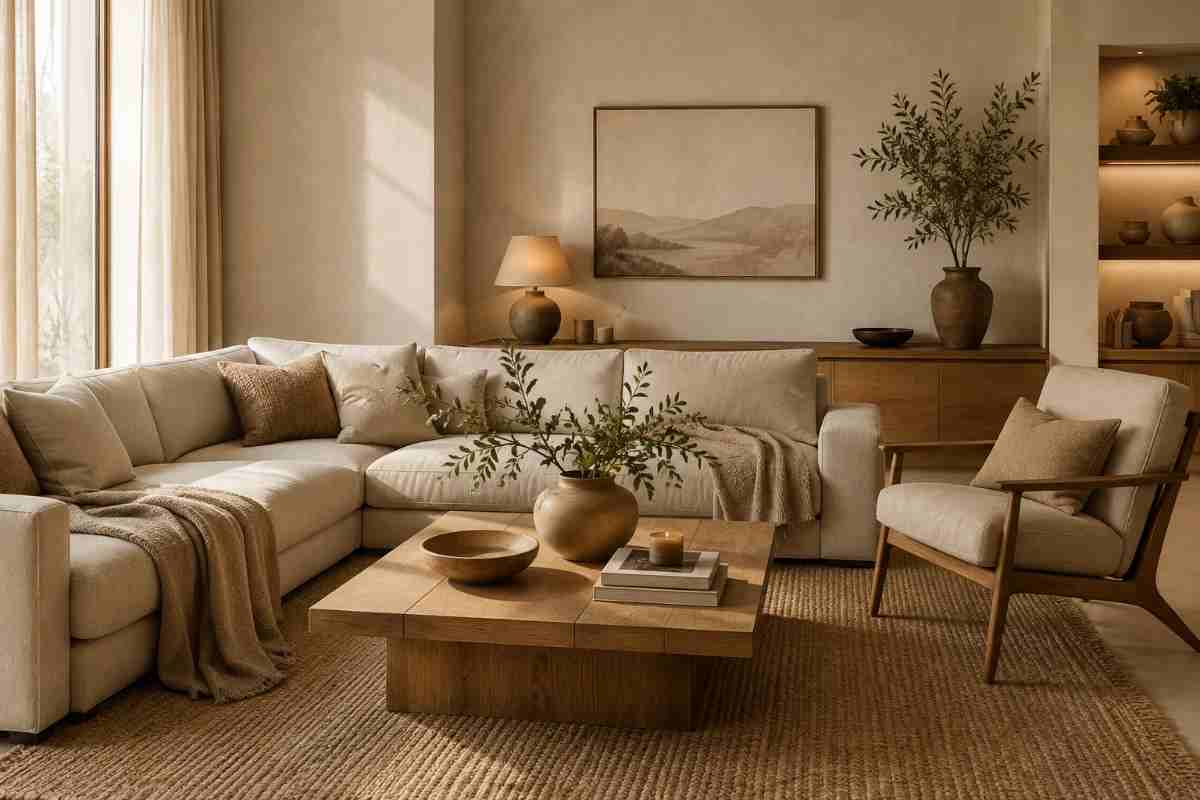
Interior design has drastically evolved in recent years, particularly in how it impacts the way we feel. For a long time, contemporary layouts targeted warm, minimalist trends with vivid white and cool grey shades. Those appearances were neat and orderly, but from time to time, they felt too cold and uninviting, like they belonged in a museum or a waiting room as opposed to a home.
Now, human beings are searching for areas that make them feel calm, secure, and connected to their surroundings.
Living rooms nowadays are being designed with warm, gentle hues like taupe, rich beige, camel, ivory, and taupe. As opposed to using flat, mundane walls, designers use layered materials and gentle light to create an at-ease feeling. The living room isn’t only for visitors anymore; it’s becoming a personal space where people can relax, create, and enjoy quiet moments with a book or a cup of coffee. To achieve this, homeowners, architects, and designers are using a more hands-on, natural approach. This fashion is steering towards fusing balance with simplicity, organic softness, amber hues, earthy tones, and tender natural elements. The goal is to curate a place that feels like home, warm, nurturing, emotionally soothing, and clean.
Warm Minimalist Trends for Elite Living
The philosophy of warm minimalist development bridges the gap between the clean, uncluttered concept of conventional minimalism and the deep, inviting comfort of natural modernism. Traditional minimalism champions negative space and strict geometric lines, but it can sometimes feel austere and unwelcoming. Warm minimalism maintains that essential discipline to eliminate visible clutter, but it swaps out cold chrome, high-gloss plastics, and artificial sheens for elements that actively engage the human senses and invite touch. In a warm minimalist living room, every item earns its place through a combination of utility and tactile beauty.
Furniture silhouettes feature smooth lines and softly arched edges. Instead of an excessive array of decorative accessories that collect dust, the focus shifts toward quality over quantity. A single, beautifully grained white oak coffee table, a hand-thrown ceramic vase with a less-than-perfect matte glaze, or a low-profile linen sofa becomes a focal point of quiet luxury. By reducing visible noise and prioritizing architectural simplicity infused with artisanal touches, we create environments in which the mind can truly settle.
Palettes Imbued with Colors and Tone
At the very heart of this design evolution is a sophisticated reinterpretation of color. Neutral aesthetic decor has moved a long way past flat beige, stark greige, or clinical white. Today’s neutral palette is rich, nuanced, and deeply conscious of natural light during the moving hours of the day. It inspires its admirers with almond, warm beige, mauve, ceramic, clay, and terracotta hues.
Constructing a successful neutral living room is based entirely on the art of layering. When you strip away loud, saturated colors, texture becomes your number one tool for creating depth, dimension, and visual interest. Don’t forget a foundation of warm alabaster or chalky off-white walls that catch the morning daylight. Layer onto this a heavy bouclé or textured linen couch in a creamy oatmeal tone. Introduce variation underfoot with a hand-knotted wool or jute rug that brings both visual contrast and rich tactility to the bare floorboards. To achieve a sophisticated visual rhythm within this framework, consider these tonal techniques.
For tonal layering, mix varying shades of ivory, sand, and warm taupe rather than painting everything a single flat white. This prevents the room from looking one-dimensional. Metals with patina shades naturally replace bright chrome with living finishes like unlacquered brass, brushed bronze, or blackened iron that age gracefully over time.
Neutral Aesthetic Decor
Furniture and Lighting Form: The silhouette of your fixtures and the softness of the light in a room dictate how cozy and inviting the space ultimately feels.
Curved Silhouettes:
Softening boxy rooms is important for creating an easy, flowing atmosphere. Introduce linear structure instead of hard, irregular shapes. These organic shapes guide the eye fluidly across the room, making spaces feel larger, more inviting, and psychologically safer.
Layered Lights:
Ditch harsh overhead lighting fixtures for low-level table lamps, wall sconces, and warm dimmers to enhance nighttime coziness. Harsh overhead fixtures cast unflattering shadows and increase the visual temperature of a room. Instead, create pools of warm illumination at various heights using lamps with ceramic bases and linen shades, allowing the space to transition easily from bright daytime functionality to an intimate evening sanctuary.
How to Warm Up a Cool Toned Living Room
If your current living room is locked into a legacy of icy grey walls, stark porcelain tile, or cool optic whites, an entire structural overhaul is rarely necessary. Learning how to warm up a cool-toned living room is an exercise in strategic layering, color balancing, and mental redirection. You can completely shift the visual and emotional temperature of a space through focused, high-impact updates.
1. Shift the Wall Shade or Introduce Textured Wallpapers
The quickest way to revamp a room’s atmosphere is to use interior designing apps and make mild alterations to the setup that would speak volumes. If repainting is not immediately viable, consider introducing warm-toned wall hangings, oversized fabric paintings, or textured lime-wash and plaster finishes that capture light in extraordinary ways. If you do choose to paint, transition away from blue-based grays toward complex, muddy neutrals—think taupe, mushroom, French linen, or a light, enveloping clay brown that absorbs light instead of reflecting it harshly.
2. Beautify Your Lighting Fixtures’ Temperature and Furnishings
Harsh, cool-toned overhead lighting fixtures can quickly kill warmth, making even the coziest furniture look clinical. Change out standard bulbs for quality LED alternatives ranging strictly between 2700K and 3000K. Layer your lighting by removing the solitary ceiling fixture in favor of a thoughtful constellation of ambient sources: sculptural floor lamps with linen shades, low-profile table lamps casting a warm downward glow, and the flickering intimacy of candles placed strategically across the room.
3. Introduce Textiles with Weight and Rich Undertones
Counterbalance cool, hard surfaces by covering them in tactile softness. Drape a heavy, chunky-knit merino wool throw over the back of a stark couch. Replace dry-looking, synthetic cushion covers with velvet, washed linen, or heavy cotton corduroy in rust, rose berry, mauve, lime green, or muted olive. These warm accents act as visual anchors, tricking the eye into perceiving the whole room as cozier, softer, and infinitely more cohesive.
The Role of Multi-Sensory Comfort and Personal Narrative
The best living rooms are the ones that don’t look like they’re from a store display. In modern aesthetics, trends toward warm and neutral spaces are rising, and it’s because people want rooms that show who they are, their everyday routines, and how they feel inside. It cherishes the quiet moments of day-to-day routines, whether that means settling into a deep armchair with a top-notch piece of detective fiction, reading fashion magazines, checking to-do planners, journaling, taking yoga classes, or rising with a morning ceramic mug of coffee. With the aid of leaning into warm minimalist principles, honoring the quiet energy of neutral aesthetic decor, and actively counteracting cold architectural factors, you can transform your living room into an enduring sanctuary. It becomes a space that not only looks effortlessly sophisticated and down to earth but truly feels like home. It becomes a personalized space that is not only seamless, modern, and level-headed but genuinely feels like home. Designing a warm and neutral living room is ultimately an exercise in mindful curation.
Realistic Home Decor Tips for Elevating Your Space
Modern home décor requires personal taste. Applying these expert styling recommendations will help you bridge the space between ideas and reality:
1. Embrace the Rule of Three on Surfaces:
When styling coffee tables, consoles, or bookshelves, group decorative items in odd numbers—normally threes. Vary the heights and materials, perhaps combining tall homemade scented candles, a medium stack of Greek literature and classics, beside a low, unpolished quartz bowl.
2. Include Upleveling Greenery:
Break up monochromatic beige and taupe palettes by including organic life. Place a fig or an olive tree in an aged terracotta pot in an empty corner and blend it with the surroundings.
3. Anchor with Oversized Artwork:
Avoid cluttering walls with multiple small, disconnected frames. Instead, invest in one large, minimalist abstract canvas featuring muted earth tones or textured plaster paintings to function as a sophisticated visual anchor behind your sofa.
4. Layer Rugs for Size:
When you have neutral carpeting or simple hardwood floors, place a smaller antique-inspired or heavy jute rug over a larger neutral base rug. This trick immediately introduces pattern, depth, and intentional zoning within an open-concept floor plan.
5. Curate Your Scents:
Actual sensory design extends beyond the visual. Fill your spaces with light, breezy scents.
Related Reads
- The Art of Shadow and Light: Steps to Create an Impressive Dark and Moody Living Room
- Small Kitchen Organization: 12 Clever Storage Ideas for Clutter-Free Countertops
- Modern Farmhouse Living Room Decor: How to Get the Look

Written by Manish Mahawar
Manish Mahawar is the founder and editor of Life Style Journey World. He writes practical, budget-friendly guides on home decor, everyday fashion and simple wellbeing habits, with a focus on ideas readers can actually use in real homes and routines.
More about the author
One Reply to “Warm Minimalist Trends: Neutral Aesthetic Decor Ideas to Warm Up a Cool-Toned Living Room”
Comments are closed.