
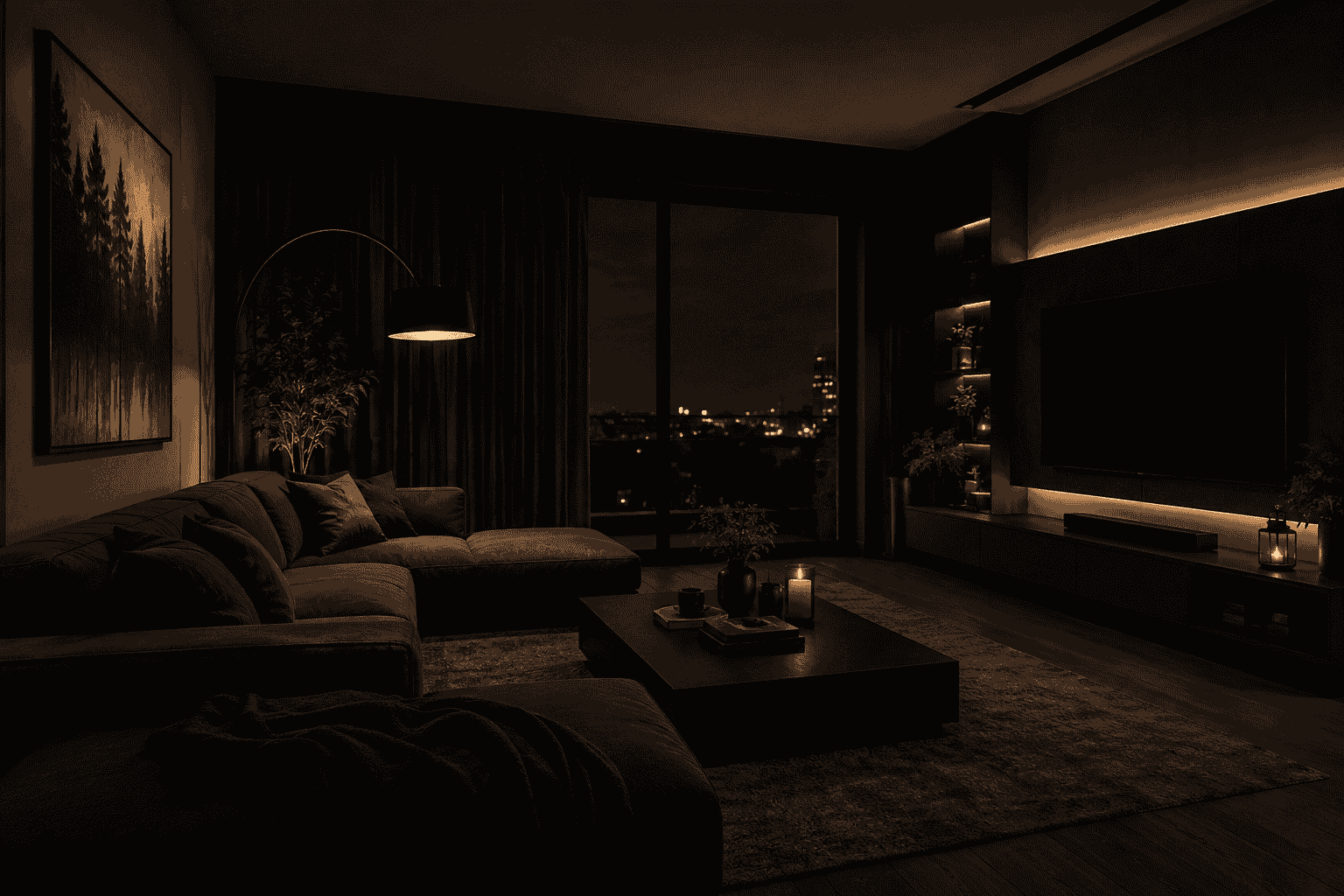
There is a definite change in the psychology that comes with entering a beautifully colored and multilayered living room. For several decades, traditional interior design had followed just painting everything in bright white to enhance natural light and keep all the rooms spacious. The bright room gives positive vibes.
As the time passed, there was an increase in demands for new and innovative designs and color shades such as dark charcoal gray, deep green, blue and even dark brown colors. They understand that a dark moody living room is not a prison cell, but a sophisticated cinema-like place.
But when heading towards dark room brighter, it takes a lot of balancing. What is the way to create a room with dark painted walls but avoiding its feeling of being suffocating? How do you brighten a dark room utilizing the principles of physics of lighting and reflecting objects instead of battling against the walls’ color? But most of all, what is the way to decorate the focal point of the room – the couch area wall décor – so that it draws attention?
This step-by-step guide will cover the professional interior design principles needed to create an atmospheric luxurious living room with total confidence and style.
The Psychology of the Dark Moody Living Room
Why do we love moody spaces? Psychologically speaking, dark colors create the effect of a comfy cocoon. They decrease the amount of visual noise, soften the hard edges of contemporary structures, and provide instant relaxation. With the darkened wall, the spotlight is centred on the furniture, textures, and lighting.
Choosing Your Base Colors
Not all dark colors are the same. The trick to making your moody room work is knowing the undertones:
Charcoal and Graphite: The cooler tones create a modern-industrial style in your environment. They make the best combinations with warm wood finishes and cognac leather.
Green in Deep Forest and Olive Shades: Color green brings the nature element to the interior space of the home.It links the indoor environment with nature, and it goes very well with brass fixtures and creamy furniture.
Chocolates and Plums: For the most cozy environment, opt for the deep brown and aubergine tones.
Top 3 Ways To Transform Dark Room Into Brighter
The most common issue about the dark-colored walls is to immediately make any room seem tiny and claustrophobic or gloomy. However, this only occurs if the light is mismanaged. In order to brighten a dark room, there is no need to flood the room with blinding overhead lights. What is needed is managing reflection, distribution, and temperature of the light.

1. Master the Technique of Layered Lighting
The biggest blunder is using only one central ceiling lighting in the dark room. The result will be an extremely harsh glare and unattractive deep shadows in the corners of the room. Always go for a professional approach using the three levels of lighting:
Ambient Lighting: Gentle dimmable flush or recessed lights providing the basic illumination.The recommended color temperature is between 2700K and 3000K.
Task Lighting: Directed task lighting, like reading lights next to the couch, swing arm wall lights, and the sideboard light.
Accent Lighting: Picture lights for hanging artwork, LEDs for the media cabinets, and floor uplights bouncing off the dark walls.
2. Introduce Strategic Reflective Surfaces
The dark walls consume the light so, there is a need to bring in something that helps to reflect light into the room.
Metallic: The brushed brass, antique gold, and polished copper work to provide high contrast against the dark paint. Using the brass coffee table or golden framed mirrors immediately adds a lively aspect to the room.
Glass and Lucite: Glass table tops or acrylic chairs maintain a freshness within the space.
3. Leverage Contrast Through Fabrics and Flooring
If the walls are a matte and dark finish, then use contrast in your flooring and textiles. Rugs high pile light colored (like a white Persian carpet or an oatmeal wool carpet) will help to balance the floor and will bounce light off of it to lighten the bottom part of the floor.
Dark Moody Living Room: Quick Design Table
For an efficient and effective design procedure, here are the below table containing a list of important design components required for an elegant moody interior:
| Design Element | Recommended Choice | Professional Styling Tip |
| Wall Paint & Undertones | Charcoal Gray, Forest Green, Midnight Navy, Deep Chocolate | Samples should be checked both in the daylight and evening. |
| Lighting Strategy | Three-Tier System (Ambient, Task, Accent) | Make sure the temperature range is within 2700k-3000k so that you have warmth and comfort rather than a cold white light. |
| Above Couch Wall Decor | Floating shelves, gallery walls with light frames or oversized statement art. | Make sure that the artwork is approximately 60%-75% of your sofa’s length. |
| Flooring & Area Rugs | Cream, oatmeal, or distressed vintage beige high-pile rugs | The light rug is placed on the floor to anchor the floor plane, letting the light reflect up. |
| Textural Contrasts | Velvet, bouclé, cognac leather, and brushed brass | Combine matte dark walls with metals and fabrics that have an element of shine and texture. |
The Ultimate Guide to Above Couch Wall Decor in a Moody Space
The wall above your sofa is the heart of your living area in terms of emotions. In dark settings, where you are decorating the wall, you should be careful about such things as proportions, contrast, and framing to avoid your decorations being lost on the wall. Here are the following ways to decor the wall above your sofa:
Approach 1: Large Size and High Contrast Artwork
If the wall is dark shade, then the small art works look lost. Boldness is the key.
Sizing: The artwork needs to occupy an area from 60 to 75 percent of the entire sofa width.
In case of an 84-inch couch, select a painting which has at least 50 to 63 inches of width (either one big horizontal or a pair of vertical ones).
Palette: Select artworks which contain vivid contrasts on the painting. This includes abstract art pieces with rich paint strokes of cream, white, gold leaf or terracotta tones. Luminous painting will be striking against the backdrop of either charcoal or green wall, thus making a perfect focal point.
Framing: It is important that the painting frame be different from the wall. If your wall is dark, then contrast your light painting with narrow natural oak frames, white mat boards or metallic gold frames.
Approach 2: The Curated Gallery Wall
If you love a grouping of photos or mixed prints over a large piece of canvas art, a gallery wall adds tremendous character to your moody room.
The Blueprint: Create continuity with consistent framing style (i.e. all antique brass frames or all black frames with wide white mats).
Content Balance: Use architectural pictures in black and white, botanical drawings and oil paintings. These artworks, together with varied textures and white mats, will form contrast with your wall paint.
Approach 3: Floating Shelves with Architectural Warmth
If you’re into changing up your seasonal decorations without drilling holes into your walls, then heavy wood floating shelves are an excellent option for you.
Tone of Wood: Pick wood with tones that are warm and rich such as American walnut, teak or stained white oak. The natural tones of the wood give warmth and enhance the dark tones of the paint.
Formula for Styling: Add leaning art prints in various heights, small pots made of ceramics, coffee table books piled together and hanging greens (like a pothos or English ivy). The green color pops against a dark background.
Approach 4: Tactile Textile Hangings and Statement Mirrors
The concept of the frame should be eradicated and instead only one new element, in the texture sense, should be used.
Large Macramé Tapestries: Add a sense of softness, sound absorption, and texture to your room through large macramé tapestries or textured fiber artwork in neutral colors like ecru, oatmeal, and sand.
Decorative Mirrors: Mount an oversized arched or curved mirror which can be of metal or light wood frame type on the wall above your sofa.Not only does it provide decorative value, but it reflects light coming from windows in the other corners of the room right back.
Layering, Textures and Elements make a Complete Look
The success or failure of a moody living room is dependent upon the texture that exists inside it because of the same color found all over the room.
The Fabric Playbook
Experiment with different fabric in sofas, chairs and other similar furnishings:
Velvet: Use moss green or sapphire blue velvet for an accent chair to bring some texture to it through reflections.
Bouclé & Sherpa: This fabric material is best for making throw pillows and ottomans, adding texture to them.
Distressed Leather: A nice looking rich cognac colored leather sofa/ chair can be a good choice.
Botanical Life in the Interior
Plants are an absolute necessity while designing interiors for a room. The plants which have a deep shade of green color look luxurious inside the dark room. Some of the plants which grow well in the dark conditions are Snake Plant (Sansevieria), ZZ Plants, and Monstera with large leaves.
Conclusion
Designing your own house is a form of self-expression. Dark color schemes will provide you with an opportunity to move away from boring trends and make your own comfortable house.With the help of proper layering of lights, high contrast features, and correct execution of your above couch wall ideas, you can definitely say goodbye to gloominess and keep the magic of a dark and moody living room at the same time.
Related Reads
- Small Kitchen Organization: 12 Clever Storage Ideas for Clutter-Free Countertops
- Modern Farmhouse Living Room Decor: How to Get the Look
- The Modern Bathroom Refresh: Ideas that Pack a Punch

Written by Manish Mahawar
Manish Mahawar is the founder and editor of Life Style Journey World. He writes practical, budget-friendly guides on home decor, everyday fashion and simple wellbeing habits, with a focus on ideas readers can actually use in real homes and routines.
More about the author
One Reply to “The Art of Shadow and Light: Steps to Create an Impressive Dark and Moody Living Room”
Comments are closed.