
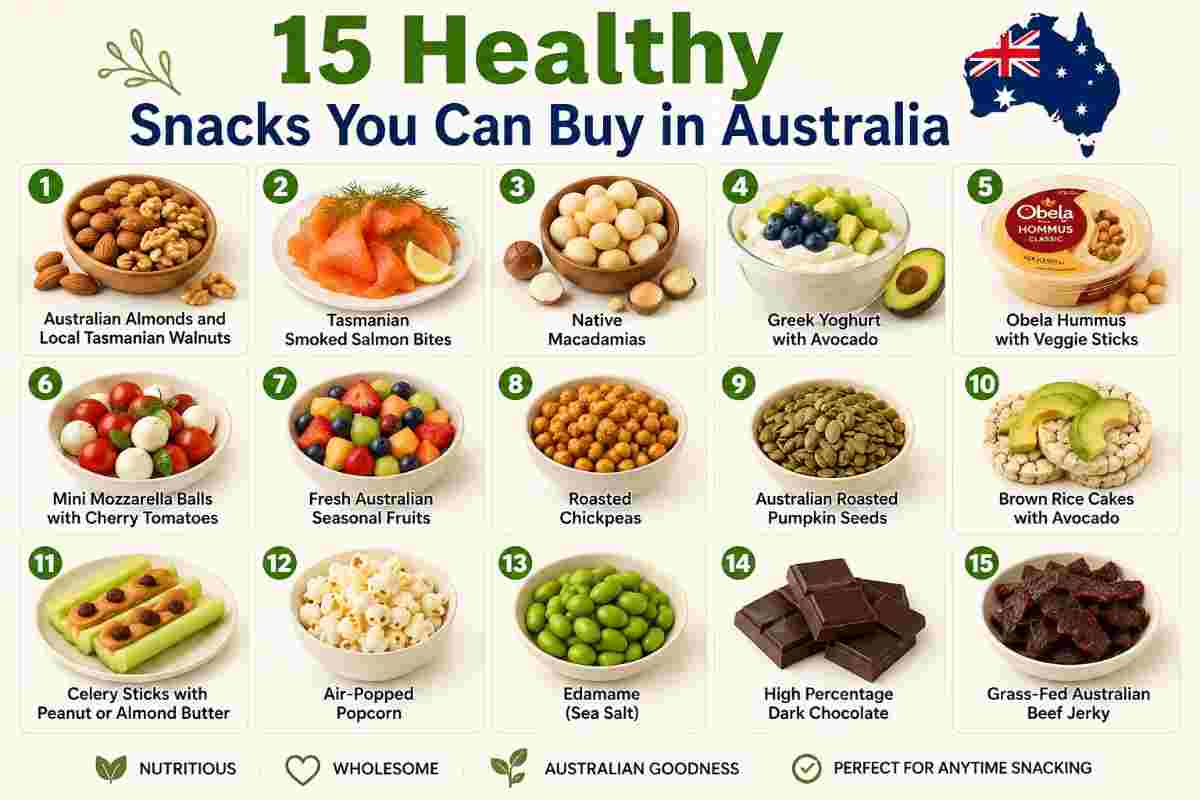
A useful snack fits your appetite, dietary needs and the place where you will eat it. This list gives 15 food options and practical packing notes for Australian readers. It is a planning guide, not a ranking of tested supermarket products. Brands, prices and stock vary, so check your local shop and the current package rather than relying on a fixed price list.
The Australian Government’s Eat for Health snack guidance includes fruit, vegetables, grain foods, legumes and unsalted nuts among its suggestions. You can use those food groups as a starting point and adapt the choices to your needs.
Choose for your situation first
For a bag without cooling, consider whole fruit or another food whose label allows storage at room temperature. For a workplace with a fridge, yoghurt, cheese and prepared dips become easier options. Check allergy rules in shared settings before packing nuts, sesame or other allergens.
Snacks are optional and individual needs differ. This article does not promise weight loss, improved cognition or stable blood glucose. If you have diabetes or another condition requiring a specific eating plan, use advice from your clinician or an accredited dietitian.
1. A piece of fresh fruit
An apple, banana, pear or mandarin is a simple choice when you have no kitchen access. Choose fruit you enjoy and can carry without it being crushed. Wash it as appropriate before eating.
2. Plain yoghurt with fruit
Pack plain yoghurt and add fruit when you are ready to eat. Keep it chilled and check the label if you need to avoid milk. A larger tub may be economical only if you will finish it within its storage instructions.
3. Unsalted nuts
Keep a small portion in a reusable container for an easy portable option. Check allergy restrictions at school or work. Whole nuts are not suitable for young children because of choking risk.
4. Vegetable sticks with hummus
Pair carrots, cucumber or capsicum with a small container of hummus. Compare packaged dips rather than assuming every version has the same ingredients. Hummus commonly contains sesame; check allergens and keep the dip chilled.
5. Wholegrain crackers with cheese
Pack crackers separately to keep them crisp. Choose cheese and crackers according to your dietary needs and compare similar products using their labels. Keep the cheese chilled.
6. Wholegrain toast with nut paste
Use a thin spread of unsalted nut paste on toast. This is convenient when you have a toaster available; it is less practical for a bag that will be carried all day. Check the ingredient and allergen information.
7. A small bowl of porridge
Cook oats according to the packet and add fruit or cinnamon if you like. Make only the amount you want for a snack. The finished portion and any toppings determine its nutritional content.
8. Canned fruit in juice
A small pack can be useful when fresh fruit is inconvenient. Check the packaging and choose a portion you can finish or refrigerate after opening. Take a spoon if this is for an office or travel bag.
9. Corn on the cob
Cook a small cob and eat it as a warm snack at home. Frozen corn is another practical format when you only need a little. Follow the packet’s cooking and storage instructions.
10. A small portion of no-added-salt beans
Warm a small can of baked beans or serve prepared beans on toast. Check the label rather than assuming that all canned beans have the same sauce or salt content. Refrigerate unused portions as directed.
11. A cooked egg
Prepare an egg to your preferred safe level of cooking and keep it chilled if eating later. Pack it in a sealed container. This option suits a break with a fridge more than a day in a hot car.
12. Cottage cheese with sliced tomato
Spoon cottage cheese into a container and add tomato at serving time. Check the product label for milk allergens and storage instructions. A fork and a chilled lunch bag make it easier to take to work.
13. Plain popcorn
Prepare popcorn according to the packet and compare the salt and flavourings in ready-made varieties. Portion it into a container instead of relying on a large sharing bag. Popcorn is a choking hazard for young children.
14. Roasted chickpeas
A packaged portion can be convenient; compare sodium between similar products and follow storage directions. Check texture and suitability for the person eating it, especially where hard foods are a concern.
15. Wholegrain crispbread with avocado
Add avocado shortly before eating so the crispbread stays crisp. Buy an avocado at a ripeness that suits the day you plan to use it. Keep the remaining portion according to appropriate food-storage guidance.
Compare labels without being misled by serving sizes
Food Standards Australia New Zealand explains that the per-100-g column helps compare similar foods. Manufacturers may use different serving sizes, so per-serving figures are not always a fair direct comparison. After comparing products, use the amount you actually plan to eat to estimate your intake.
For example, if a packet lists 300 mg of sodium per 100 g, a 30 g portion contains about 90 mg: 300 × 30 ÷ 100. This is a calculation example, not the nutrition data for a named product or a recommended sodium target. Check ingredients and allergen statements separately from the nutrition panel.
Make the shopping list work for your budget
Choose two or three options you will use, then list the equipment and storage each requires. A snack that needs a fridge is not a bargain if it spoils on your commute. Compare unit prices and buy larger packs only when you can store and finish them. Check what is already in your kitchen before adding another variety.
A simple planning example is fruit for a commute, yoghurt for a day with fridge access, and toast for a snack at home. That is an organisational example, not a meal prescription; adjust foods and portions to your appetite, allergies and dietary advice.
Frequently asked questions
Does everyone need to snack between meals? No single schedule suits everyone. Hunger, activity, meal timing and medical needs can differ. A snack can be convenient, but eating one is not a requirement for a healthy routine.
Is a packaged snack automatically unhealthy? No. Packaging alone does not tell you the nutritional value. Read the label and compare similar foods; claims such as “natural” are not a substitute for checking ingredients and nutrition information.
Why are there no exact prices or calorie counts? Product recipes, package sizes, prices and portions differ. Current labels and local prices are more useful than unsourced figures. The examples here identify foods and preparation choices, not verified offers from a retailer.
General information: This article is educational and has not been presented as an individual medical or dietetic assessment. Contact a qualified health professional for advice about a medical condition or specialised dietary needs.
Related Reads
- Healthy Breakfast Ideas Canada: A Practical Guide to Starting Your Day Right
- 7 Practical Morning Habits for a More Manageable Day
- Intermittent Fasting for Beginners: Understanding 16/8, Limits and Safety

Written by Manish Mahawar
Manish Mahawar is the founder and editor of Life Style Journey World. He writes practical, budget-friendly guides on home decor, everyday fashion and simple wellbeing habits, with a focus on ideas readers can actually use in real homes and routines.
More about the author